Your shopping cart is empty!

That Flutter in Your Chest
That brief pause, the sudden flutter, the sense that your heart is dancing to its own rhythm. If this sounds familiar, you are not alone. Heart palpitations are one of the most common reasons people visit cardiologists and TCM practitioners alike. For most people, they are harmless. But they can also be unsettling, and they deserve to be understood rather than dismissed or endured.
Think of your heart rhythm like a well-maintained clock. A good clock ticks evenly, second after second, hour after hour. The gears mesh perfectly. The pendulum swings with steady precision. Now imagine what happens when a bit of dust gets into the gears. The clock might skip a beat, tick unevenly, or speed up for no apparent reason. The mechanism is still intact, but something is interfering with its smooth operation. The clock does not need to be replaced -- it needs to be understood and corrected.
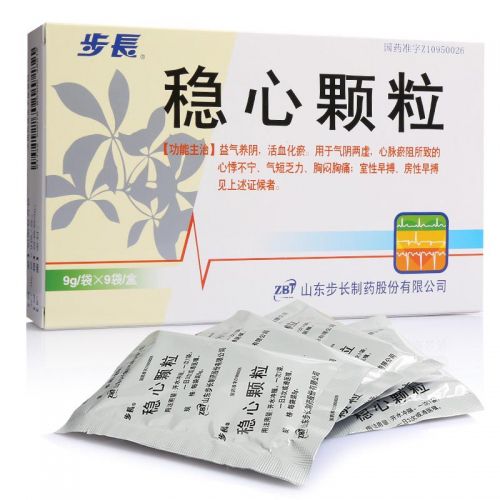
That interference is what TCM seeks to identify and address. Rather than just trying to stop the flutter, TCM asks what is disrupting the clock in the first place. Different disruptions produce different kinds of palpitations, and different kinds of palpitations respond to different approaches. Wenxin Keli was designed to handle several of the most common patterns at once, which is one reason it has been so widely adopted in clinical practice.
What Palpitations Feel Like
Not all palpitations feel the same, and paying attention to the specific sensation can tell you a lot about what is going on. Some people describe a skipped beat followed by a hard thump -- as if the heart is catching up after a pause. Others feel a rapid fluttering, like a bird trapped in the ribcage. Some experience a pounding sensation that seems to shake the whole chest, especially when lying down at night. And still others feel a general sense of unease, as if the heart is beating oddly even when the pulse seems normal to the touch.
These different sensations matter because they point to different underlying patterns in TCM. A skipped beat with a strong rebound thump often relates to qi deficiency -- the heart lacks the energy to complete a full contraction, so it pauses to gather strength, then contracts harder to compensate. Rapid fluttering often involves heat or phlegm disturbing the heart's rhythm, creating a chaotic electrical environment. Pounding at night may reflect yin deficiency, where the cooling, moistening aspect of the body is insufficient to keep the heart calm during rest. Palpitations that come with a sense of panic or impending doom often involve shen disturbance, where the mind itself is agitating the heart.
Conventional medicine categorizes palpitations by their electrical origin -- atrial versus ventricular, premature beats versus sustained arrhythmias, and so on. Both perspectives have value, and they can complement each other nicely. The ECG tells you where the arrhythmia is coming from. TCM tells you why it is happening in the context of your whole body. A skipped beat from an atrial focus might be driven by stress in one person and by exhaustion in another, and the treatment should differ accordingly.
The TCM Patterns Behind the Flutter
TCM identifies several distinct patterns that can underlie heart palpitations. Most people with chronic palpitations present with a combination of these patterns, not just one alone. Understanding which patterns apply to you is the first step toward finding the right support, and it is also the reason that a multi-target formula like Wenxin Keli can be effective across a broad range of patients.
Qi Deficiency Pattern -- This is the most common single pattern underlying palpitations. The heart lacks sufficient qi to maintain a steady, forceful beat. Palpitations tend to worsen with fatigue or exertion, improve with rest, and return when you push yourself too hard. You might also feel short of breath, sweat easily, and have a low, soft voice. Your appetite may be poor, and your limbs may feel heavy or weak. The pulse is typically weak or thin. In our clock analogy, qi deficiency is like a weakening mainspring -- the clock still runs, but its power is inconsistent, causing it to skip and stutter.
Yin Deficiency Pattern -- Here the body lacks the cooling, moistening elements that keep the heart calm and grounded. Palpitations often come with a feeling of heat, especially in the palms and soles, dry mouth at night, night sweats, and a general sense of restlessness. The fluttering may be worse in the evening or after lying down. The tongue is typically red with little or no coating. This is like the clock's gears running hot because they lack proper lubrication -- the metal expands, friction increases, and the mechanism becomes erratic.
Blood Stasis Pattern -- In this pattern, blood is not circulating smoothly through the heart vessels. Palpitations may be accompanied by a stabbing or pressing sensation in the chest, as if something is stuck. The pain is fixed in location and may be worse with cold weather. The tongue often appears purple or has dark spots on its surface. The pulse may be choppy or hesitant. Blood stasis is like a gear that has accumulated debris -- it still turns, but it catches and grinds with every rotation, producing an uneven motion that can be felt throughout the system.
Phlegm-Heat Pattern -- This involves both phlegm (dampness that has congealed and become sticky) and heat (inflammation or nervous agitation). Palpitations tend to be intense and fluttering, often accompanied by a feeling of heaviness or oppression in the chest. There may be a sticky or bitter taste in the mouth, a greasy coating on the tongue, and a tendency toward nausea or dizziness. The person may feel fuzzy-headed or have difficulty concentrating. The clock here is not just dusty but gummed up with sticky residue that interferes with the gears at multiple points.
Shen Disturbance -- The shen, or spirit, resides in the heart according to TCM. When the shen is disturbed by stress, anxiety, grief, or shock, the heart responds with palpitations. These palpitations often come with insomnia, vivid or disturbing dreams, a tendency to startle easily, and difficulty settling down at night. The person may feel anxious without a clear reason. This is the clock being bumped by an external force -- the mechanism itself is fine, but something keeps knocking it off balance, preventing it from settling into a steady rhythm.
How Wenxin Keli Addresses Each Pattern
Wenxin Keli's design is remarkably thorough when you map it against these five patterns. It was not created to treat just one type of palpitation. It was designed to address the combination of patterns that most commonly occurs together in clinical practice -- typically a mix of qi deficiency, yin deficiency, and blood stasis, with elements of the other patterns mixed in depending on the patient.
The qi deficiency pattern is addressed by Codonopsis, the formula's sovereign ingredient. Codonopsis gently builds qi without the overstimulation that stronger herbs can cause, giving the heart more consistent energy to work with. Patients who feel their palpitations worsen with fatigue often notice a gradual improvement as their energy levels stabilize over the first few weeks of use. The weakened mainspring gets rewound, not all at once but steadily, day by day.
The yin deficiency pattern is handled by Polygonatum. Its moistening, nourishing quality helps cool the heart and calm the fluttering that tends to worsen at night or in warm environments. Polygonatum works slowly and steadily, rebuilding the body's reservoir of yin over time. This is not a quick fix -- rebuilding yin reserves takes weeks to months -- but the cumulative effect is meaningful. The overheated gears gradually get their lubrication back.
For blood stasis, Notoginseng takes the lead. It activates circulation and helps clear blockages in the heart vessels. Patients with chest tightness or a pressing sensation often find relief as blood flow improves. Notoginseng does not just thin the blood in a crude way -- it improves the quality of circulation so the heart receives better nourishment and waste products are cleared more efficiently. The debris is cleared from the gears, allowing them to turn smoothly again.
The phlegm-heat pattern and shen disturbance both respond to Nardostachys. This aromatic herb clears turbidity, calms the spirit, and helps regulate the autonomic nervous system. Its calcium-channel-blocking compounds directly affect the electrical activity of heart cells, which may explain why it helps with both the sensation of fluttering and the anxiety that often accompanies it. The sticky residue dissolves, and the external bumping that was knocking the clock off balance gradually subsides.
And Succinum ties everything together. It stabilizes the spirit, anchors the heart, and ensures the other ingredients work in concert rather than at cross purposes. Think of it as the clock's pendulum -- the steadying force that keeps everything swinging at the right tempo. Without it, even the best repair work can drift off course over time.
This multi-pattern approach is what sets Wenxin Keli apart from treatments that target only one mechanism. The formula acknowledges that real-world palpitations rarely fit neatly into a single diagnostic category. Most people have a bit of qi deficiency and a bit of blood stasis, or yin deficiency with shen disturbance layered on top. Wenxin Keli covers the overlaps, which is why it can be effective for a broad range of patients even though no two cases are exactly alike.
When Stress and Blood Pressure Join the Picture
Stress-triggered palpitations deserve special attention because they represent such a common and treatable subgroup. When your nervous system is on high alert, your heart speeds up, your blood vessels constrict, and your blood pressure rises. This is normal in short bursts -- it is what allowed your ancestors to outrun predators. But when stress becomes chronic, the pattern can persist even at rest. The clock is constantly being knocked off balance by an external force that never goes away.
For people whose palpitations come with tension headaches, irritability, and blood pressure fluctuations, the combination of Wenxin Keli with Songling Xuemaikang may offer more comprehensive support. Songling Xuemaikang focuses on calming the liver and controlling blood pressure -- addressing the "liver wind" that agitates the heart from outside. The two formulas work on different levels: one supports the heart from within by addressing qi, yin, and blood flow, and the other calms the external factors that disturb it. Under professional guidance, this layered approach can help stabilize both the rhythm and the pressure simultaneously.
Knowing When to Seek Help
While most palpitations are benign, some require immediate medical attention. If your palpitations come with chest pain that radiates to your arm or jaw, severe shortness of breath, fainting or near-fainting, or a feeling that your heart is racing and not slowing down, seek emergency care. Palpitations that last for hours at a time or come with significant dizziness also warrant a thorough checkup before you start any new treatment, herbal or otherwise.
Herbal support like Wenxin Keli is best used as part of a broader approach that includes proper medical evaluation. A Holter monitor or event recorder can tell you exactly what kind of rhythm your heart is producing over a 24-hour period, which helps you and your practitioner choose the right strategy. An echocardiogram can rule out structural heart problems that might need different treatment. Palpitations are a signal, not the whole story. The question TCM asks is not just "what is the symptom?" but "what is the clock trying to tell us about the overall state of the body?"
Disclaimer: The information provided here is for educational purposes and should not replace professional medical guidance. Heart palpitations can have serious underlying causes. If you experience chest pain, severe shortness of breath, or fainting along with palpitations, seek emergency care immediately. Wenxin Keli is a dietary supplement rooted in Traditional Chinese Medicine. Consult your doctor before use, particularly if you are pregnant, nursing, or taking prescription heart medications.
-

- Date Published: 2026-07-21
- Date Updated: 2026-07-27
- Category: Theory
Related Products
$12.00