Your shopping cart is empty!

- Type 2 Diabetes Mellitus (T2DM) represents a major global public health concern, characterized by chronic hyperglycemia resulting from insulin resistance and progressive pancreatic β-cell dysfunction.
- This persistent high glucose state significantly jeopardizes patients' quality of life by causing irreparable harm to vital organs, including the kidneys, eyes, nerves, and microvessels, leading to serious complications such as cardiovascular disease, renal failure, and blindness.
- Given the high prevalence—with China alone reporting approximately 92.4 million diabetic adults—effective, safe, and holistic management strategies are urgently needed.
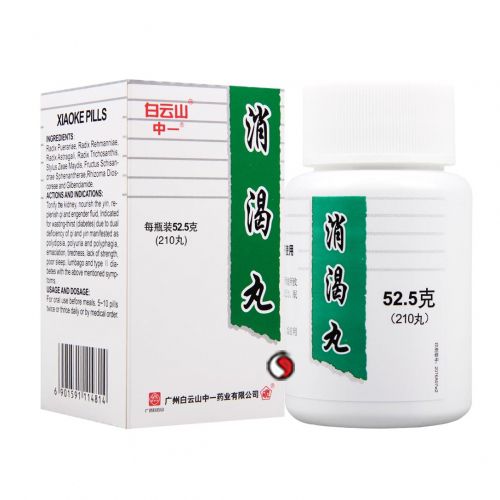
- The term Xiao Ke Wan (XKW, 消渴丸), or Xiaoke Pill, refers to a unique, standardized proprietary medicine widely used in the clinical management of T2DM in China.
- Critically, XKW is not a pure herbal product; it is an integrative compound preparation that combines a complex polyherbal traditional Chinese medicine (TCM) formula with a conventional Western pharmacological agent, Glibenclamide.
- Glibenclamide, a second-generation sulfonylurea, provides rapid, potent glucose-lowering effects by stimulating the pancreas to release insulin.
- The therapeutic goal of XKW’s formulation is to achieve synergy: utilizing the swift glycemic control provided by the Western drug while simultaneously leveraging the systemic, regulatory, and complication-mitigating actions of the traditional herbs.
- Clinical research, particularly randomized controlled trials, has established the position of XKW in T2DM care:
- Efficacy: XKW provides non-inferior glycemic control compared to Glibenclamide monotherapy, demonstrating similar reductions in established markers such as HbA1c and Fasting Plasma Glucose (FPG) over prolonged periods.
- Safety Advantage: The presence of the herbal matrix provides a crucial safety improvement. XKW significantly reduces the risk and rate of total, mild, and, most importantly, nocturnal hypoglycemia compared to Glibenclamide alone. This advantage is paramount, as hypoglycemia is the most immediate and dangerous side effect of sulfonylureas.
- In Traditional Chinese Medicine (TCM), the constellation of symptoms corresponding to T2DM is known as Xiāo Kě (消渴), which translates roughly to "Wasting and Thirsting".
- The primary clinical symptoms of this syndrome are recognized classically as the Three Excessives (三多):
- Excessive thirst (多饮)
- Excessive hunger (多食)
- Excessive urination (多尿)
- A patient suffering from Xiāo Kě may exhibit these three excessive states yet still experience fatigue, low energy, and a general wasting or thin body appearance. Frequent nocturnal urination is also commonly reported.
- TCM views Xiāo Kě as a systemic disorder affecting multiple organs, particularly the Lung, Spleen, and Kidney systems, and involving disturbances in the circulation of Qi (vital energy) and Blood.
- The core pathology is rooted in deep deficiencies, primarily:
- Yin Deficiency and Internal Heat: The lack of Yin (the cooling, nourishing, moistening aspect of the body) leads to unconstrained internal Heat or Fire. This Heat consumes the body's vital fluids (Jin Ye), which manifests as the excessive thirst and urination observed clinically.
- Qi Deficiency: A fundamental lack of Qi, often stemming from Spleen (digestive) and Kidney (essence) dysfunction, causes the chronic fatigue and wasting seen in patients.
- Blood Stasis: The continuous depletion of fluids causes the blood circulation to become turbulent, preventing normal flow and leading to Blood Stasis.
- This traditional perspective provides a holistic explanation for the systemic deterioration associated with T2DM. While Western medicine focuses primarily on glucose reduction, the TCM approach addresses the root deficiencies and circulatory blockages (Qi/Yin deficiency and Blood Stasis) believed to drive the progression toward diabetic complications. The objective of TCM treatment is to restore a good balance of Yin, Yang, Qi, and Blood, thereby reducing the risk of developing simultaneous collateral diseases.
- The treatment of Xiāo Kě, particularly the common presentation of Qi and Yin dual deficiency, focuses on the following therapeutic strategy:
- Nourishing Yin and Promoting Fluid Production: To counteract the dryness and heat consuming the fluids.
- Invigorating Qi and Strengthening the Spleen/Kidney: To restore energy, combat fatigue, and support fundamental metabolic function.
- Clearing Heat and Resolving Stasis: To eliminate internal heat that is consuming the body and promote microcirculation.
- Xiao Ke Wan is specifically formulated to address the TCM syndrome pattern of Qi and Yin dual deficiency while ensuring measurable, immediate blood glucose control.
- The inclusion of Glibenclamide is the key differentiating factor, making it a powerful hybrid medication.
- The rationale for this compound preparation is based on combining the two distinct yet complementary therapeutic functions: the Glibenclamide component provides the immediate, powerful hypoglycemic effect required for rapid clinical stabilization, while the herbal component provides complex, long-term metabolic regulation.
- The herbal formula in XKW comprises approximately sixteen ingredients, designed to simultaneously address the root deficiencies and the symptomatic manifestations. Key herbs and their integrated functions are detailed below:
| Ingredient (Pinyin) | Botanical Name | TCM Primary Action | Role in Addressing Xiāo Kě Syndrome |
| Di Huang -shu | Rehmannia glutinosa | Nourishes Yin, Tonifies Kidney Essence | Addresses the core Yin deficiency and replenishes consumed fluids |
| Tian Hua Fen | Trichosanthes kirilowii | Clears Heat, Generates Fluid | Targets Internal Heat and dryness, reducing polydipsia |
| Huang Qi | Astragalus membranaceus | Tonifies Qi, Supports Organ Function | Combats fatigue and systemic wasting (Qi deficiency) |
| Ren Shen | Radix Ginseng | Greatly Tonifies Yuan Qi | Powerful support for overall energy and systemic strength |
| Ge Gen | Pueraria Thomsonii | Generates Fluid, Relieves Thirst | Provides direct relief for the excessive thirst symptom |
| Shan Yao | Dioscorea opposita | Tonifies Spleen and Kidney | Aids digestive function and supports fluid metabolism |
| Glibenclamide | Sulfonylurea Drug | Stimulates Insulin Release | Essential for achieving acute clinical glucose targets |
- The profound clinical value of the XKW formulation lies in its ability to modulate the side effects traditionally associated with the sulfonylurea class of drugs. Glibenclamide is known to cause gastrointestinal reactions and, critically, abrupt drops in blood sugar.
- The traditional herbal components, particularly the Qi- and Yin-tonifying herbs like Huang Qi and Rehmannia, stabilize the patient's underlying metabolic environment.
- This systemic stabilization functions as a metabolic buffer. By nourishing Yin and invigorating Qi, the formula counteracts the consuming effects of the disease and the harsh effects of the drug, effectively alleviating side effects such as indigestion and leukopenia associated with Glibenclamide.
- This mechanism is believed to be the reason why patients treated with XKW experience significantly fewer episodes of hypoglycemia compared to those receiving Glibenclamide monotherapy. The integrative approach transforms a potent drug with recognized acute risks into a safer, more balanced therapeutic option by supporting the host body’s resilience.
- The efficacy and safety of XKW have been rigorously evaluated in large-scale clinical trials, including randomized controlled trials (RCTs) and subsequent meta-analyses.
- One pivotal study compared XKW directly against Glibenclamide monotherapy over 48 weeks in T2D patients who had inadequate glycemic control (HbA1c between 7% and 11%). The cohort was divided into two clinical groups: a drug-naïve group and a group already receiving Metformin monotherapy.
- The analysis demonstrated that XKW provided glycemic control comparable to that achieved by Glibenclamide alone, confirming its therapeutic utility.
- HbA1c Reduction: In the drug-naïve group, the mean change in HbA1c from baseline after 48 weeks was -0.70% for XKW and -0.66% for Glibenclamide. This narrow difference (-0.04% between-group difference) indicates non-inferiority.
- Fasting Plasma Glucose (FPG): Similar equivalence was observed in FPG control. In the drug-naïve group, the absolute change in FPG was -1.42 mmol/L for XKW versus -1.43 mmol/L for Glibenclamide, representing a negligible difference.
- These findings establish that the herbal matrix does not compromise the acute glucose-lowering capability provided by the Glibenclamide component; the therapeutic efficacy of XKW remains equivalent to the conventional Western drug.
- The most significant advantage identified for XKW is its substantially reduced risk of hypoglycemia, which is directly attributable to the stabilizing effects of the herbal components.
- Reduction in Total Hypoglycemia (Drug-Naïve): Patients in the XKW arm of the drug-naïve group had a total hypoglycemia incidence of 15.2% (28 patients) compared to 21.2% (39 patients) in the Glibenclamide arm. This means XKW patients were 38% less likely to experience any hypoglycemia compared to those on Glibenclamide (Odd Ratio 0.62).
- Reduction in Annual Hypoglycemia Rate (Metformin Group): The disparity was even more pronounced when XKW was added to Metformin. The average annual rate of hypoglycemia was 62% lower in the XKW arm (1.91 episodes per year) compared to the Glibenclamide arm (3.76 episodes per year).
- Reduction in Nocturnal Hypoglycemia: XKW demonstrated a profound protective effect against nocturnal hypoglycemia, a condition that poses a higher risk due to delayed detection. In the Metformin group, the incidence of nocturnal hypoglycemia was 0.5% with XKW versus 4.2% with Glibenclamide (Odd Ratio 0.12).
- This reduction in hypoglycemia risk is crucial. The finding that XKW maintains safety benefits even when combined with Metformin demonstrates that the herbal component successfully stabilizes the metabolic environment across varying pharmacological backgrounds, significantly improving the risk profile of sulfonylurea therapy.
- Outcome Measure: HbA1c Mean Change (Drug-Naïve) | XKW (Integrative): ≈ -0.70% | Glibenclamide (Monotherapy): ≈ -0.66% | Comparative Advantage of XKW: Non-inferior glycemic improvement
- Outcome Measure: Total Hypoglycemia Incidence (Drug-Naïve) | XKW (Integrative): 15.2% | Glibenclamide (Monotherapy): 21.2% | Comparative Advantage of XKW: 38% lower risk
- Outcome Measure: Annual Hypoglycemia Rate (Metformin Group) | XKW (Integrative): 1.91 episodes/year | Glibenclamide (Monotherapy): 3.76 episodes/year | Comparative Advantage of XKW: 62% lower rate
- Outcome Measure: Nocturnal Hypoglycemia Incidence (Metformin Group) | XKW (Integrative): 0.5% | Glibenclamide (Monotherapy): 4.2% | Comparative Advantage of XKW: Significant reduction (OR 0.12)
- The robust clinical safety profile of XKW is substantiated by modern pharmacological research employing network analysis, which reveals the formula's complex multi-target mechanism.
- This approach is fundamentally different from single-target Western pharmaceuticals and aligns directly with the holistic, systemic regulation sought in TCM. The numerous compounds within the herbal components interact with multiple targets and signaling pathways simultaneously, providing comprehensive therapeutic effects.
- Pharmacological investigation confirms that XKW's components contribute significantly to improving core metabolic disorders associated with T2DM. Key mechanisms include:
- Enhancing insulin sensitivity in peripheral tissues (e.g., liver, muscle).
- Promoting glucose uptake and utilization.
- Protecting pancreatic β-cell function from glucotoxicity and lipotoxicity.
- The long-term organ protection attributed to XKW in TCM theory (addressing Blood Stasis and clearing Heat) is validated by the modulation of molecular pathways known to drive diabetic complications.
- Inflammation and Oxidative Stress: Specific compounds within XKW exhibit anti-inflammatory and antioxidative properties. For instance, certain constituents reduce markers of oxidative stress (e.g., MDA) and key inflammatory cytokines (e.g., IL-6).
- Signaling Pathways: XKW components target critical regulatory pathways involved in chronic disease progression. These include the PI3K-Akt signaling pathway and the TNF signaling pathway, which are implicated in inflammation, angiogenesis, and fibrosis associated with microvascular complications like Diabetic Nephropathy (DN).
- By regulating these complex biological networks, XKW provides a comprehensive protective effect on the body's systems, fulfilling the TCM goal of preventing disease deterioration and reducing the risk of simultaneous co-morbidities.
- Xiao Ke Wan is typically administered orally.
- Standard Administration: 5-10 pills at a time, 2-3 times a day, taken with warm water before meals.
- Caution on Dose: Due to the inclusion of Glibenclamide, the dosage must be individualized based on the patient's existing glycemic control and monitored by a qualified physician. Excessive dosage, especially in the elderly, weak, or patients with liver/kidney dysfunction, carries a heightened risk of severe hypoglycemia.
- While XKW is effective, it is not suitable for all T2D patients. Exclusion criteria used in clinical research highlight necessary precautions:
- Patients with Type 1 Diabetes.
- Patients prone to diabetic ketoacidosis.
- Patients with severe hepatic or renal impairment.
- Pregnant or lactating women.
- Patients with a history of severe sulfonylurea allergy.
- The greatest potential danger associated with Xiao Ke Wan is the combination of the potent sulfonylurea (Glibenclamide) with the potentially additive effects of the herbal components, particularly when combined with other anti-diabetic medications.
- A systematic review on possible herb-drug interactions found that clinical case reports linked XKW use with severe adverse outcomes when combined with other anti-diabetic drugs. Approximately 82.8% of reported cases of deterioration were associated with life-threatening complications, including hypoglycemic coma, stroke, mental disorder, and even death.
- It is imperative that healthcare professionals and patients recognize XKW as a powerful combination medication, not a simple herbal supplement. Concurrent use with other drugs that lower blood glucose (e.g., insulin, high doses of metformin, or other sulfonylureas) requires meticulous adjustment and aggressive glucose monitoring to prevent severe, life-threatening additive hypoglycemic effects.
- The standardized formulation of XKW has achieved high levels of institutional acceptance within China. It has been consistently included in national clinical guidelines for the prevention and treatment of Type 2 Diabetes (2010, 2013, and 2017 editions).
- This inclusion validates its role as a frontline option for patients whose T2D presentation aligns with the Qi and Yin deficiency syndrome pattern.
- Xiao Ke Wan represents a successful, standardized model of integrative medicine. It offers patients with T2DM and inadequate glycemic control an effective therapeutic approach that delivers non-inferior blood sugar lowering compared to Glibenclamide monotherapy while providing a critical clinical safety advantage—a significant reduction in the incidence and severity of hypoglycemia.
- This superior safety profile, achieved through the systemic stabilizing and Yin-nourishing effects of the herbal matrix, addresses a major limitation of sulfonylurea drug use.
- For the continued global adoption and safety of XKW, ongoing research must prioritize the standardization of the active ingredients and dosages within the herbal components.
- Furthermore, network pharmacology studies should continue to precisely map the molecular mechanism by which the polyherbal matrix buffers against acute glucose drops and ameliorates insulin resistance, confirming the biological underpinnings of this successful integrative treatment strategy.
- Given the compound nature of XKW, rigorous patient education and professional caution regarding herb-drug interactions remain essential for ensuring safe clinical practice.
-

- Date Published: 2025-12-11
- Category: reseach
- Tags: xiao ke wan xiaoke pillRelated Products
 $12.00